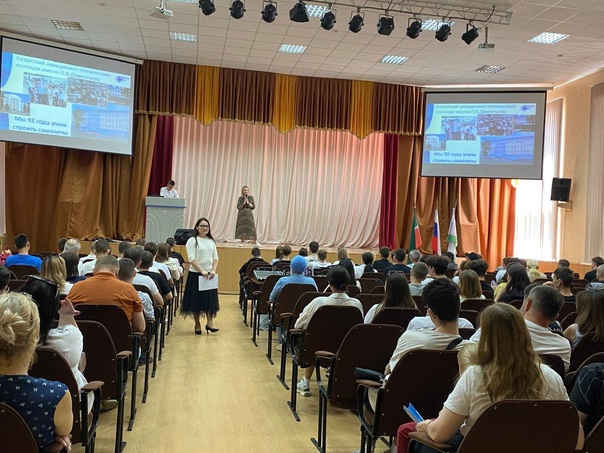
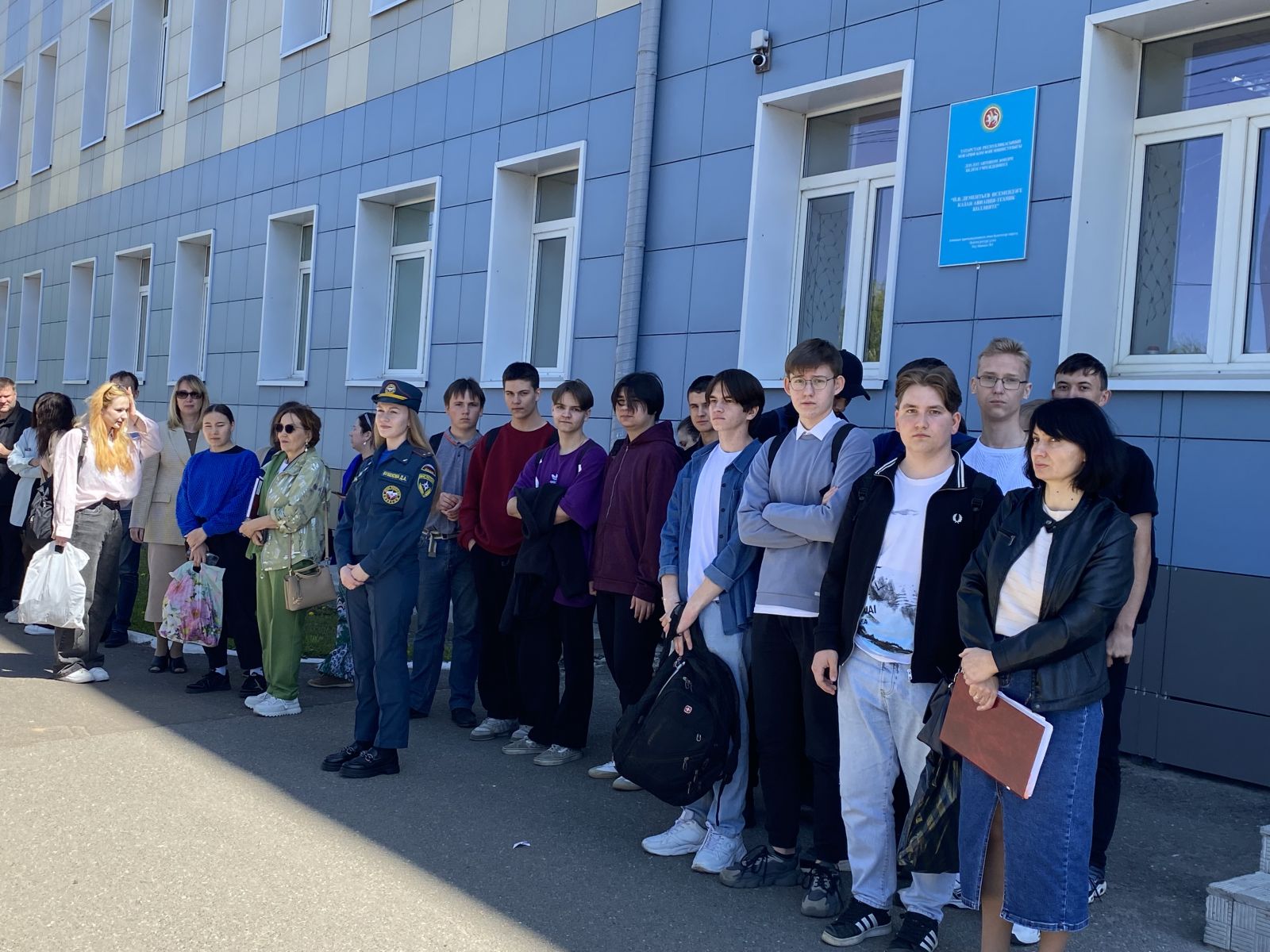
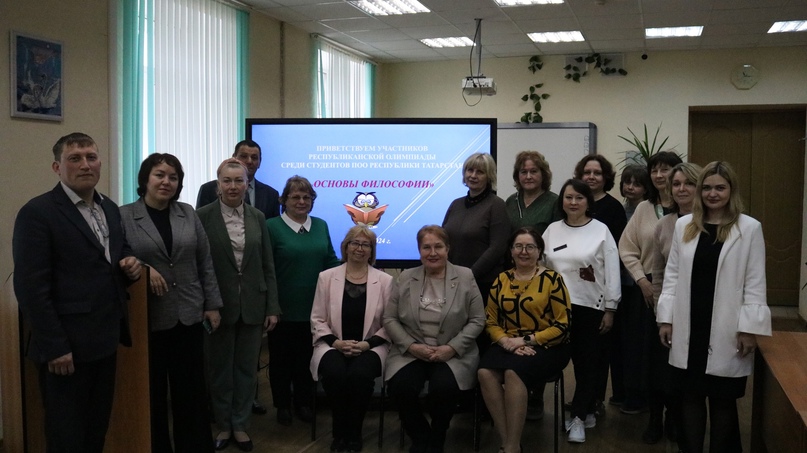
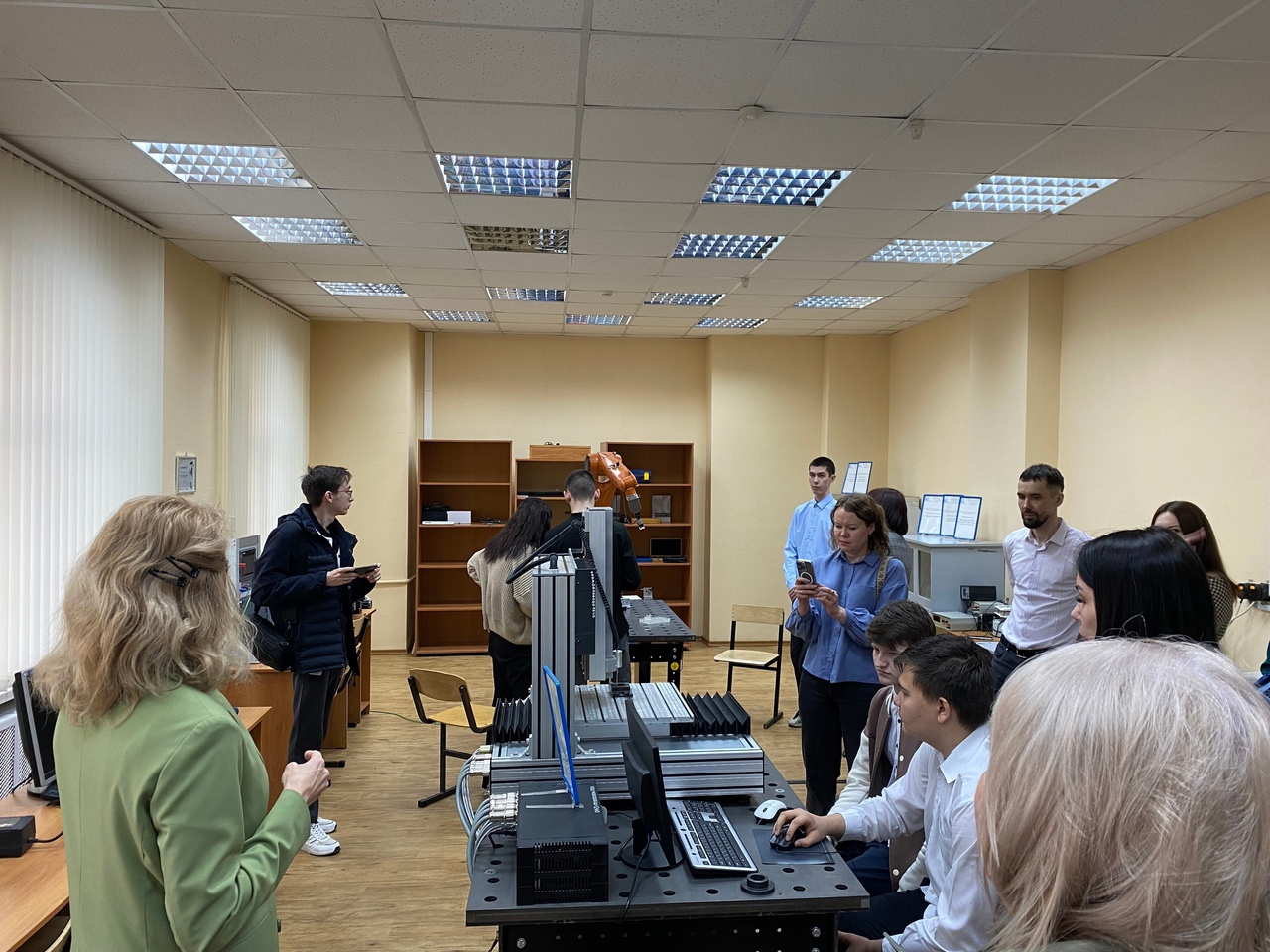
Юбилейная X Всероссийская студенческая научно-практическая конференция «Я – будущий специалист авиационной промышленности»

Благотворительная акция «Осенние дни добра»

Привлечение молодежи к реализации акции

#ДОБРАЯКАЗАНЬ#ДАРЮБЛАГО

#ЖИВУВКАЗАНИ и популяризация идей- добровольчества среди студентов колледжа.

«Урок благотворительности»-Флэш-Моб в парке «Крылья Советов»

Проведения классных часов «История государственной благотворительности в России»

Информирования населения о старте акции, о международном дне благотворительности (раздача листовок)

1

Внимание!

2 по 3 ноября 2016 года прошли   военно-спортивные играх «Защитник Родины» на  базе  Республиканского центра спортивно-патриотической и допризывной подготовки молодежи «Патриот,10 студентов нашего колледжа были задействованы в данном мероприятии.

Колледжу 85 лет!

17 ноября 2017 года наш колледж отмечал свой юбилей-85 лет.

Внимание!Расписание занятий в колледже!

Расписание 1 курс

Расписание 2,3,4 И 5 курсы

Избирательный участок № 4 Центр – Административное здание, улица Дементьева, д. 39, комната 107.

Избирательный участок № 4

Центр – Административное здание, улица Дементьева, д. 39, комната 107.

входят улицы:

ул. Ак. Павлова д.д.1, 6, 8, 10, 9-13б,17, 34-46а,

Годовикова, дд.12а, 13,17, 19, 29а-81, 14а, 20-58,

Лукина, дд. 52, 54, 56, 58, стр. №48

Молодёжная, дд.3, 3а,

СНТ КАПО-5, СНТ КМПО-4,

Улицы Тамбовская, Циолковского, Чайковского.

телефон УИК №4 513-30-34

Режим работы: ежедневно

в будни с 9.00до 20.00,

в выходные и праздничные дни с 9.00 до 14.00


Phantom NFT and the Phantom Crypto Wallet: What Solana Users Should Understand Before Installing

You are browsing a Solana NFT marketplace from Germany, connect your wallet, and receive an unfamiliar NFT a few seconds later. It has an attractive image and perhaps even a button inviting you to “claim” a reward. The natural reaction is curiosity. The safer reaction is to treat the object as untrusted data until you know what it does. This small scenario captures the central security lesson of Phantom: a wallet is not merely an app for viewing balances. It is an interface between your private keys, blockchain transactions, and websites that may have very different incentives.

Phantom became closely associated with Solana because it made sending SOL, managing tokens, exploring DeFi, and handling NFTs relatively accessible. Its current multi-chain direction broadens that usefulness, with support described for networks including Solana, Ethereum, Bitcoin, Base, Polygon, Avalanche, Binance Smart Chain, Fantom, and Tezos. But broader access also creates a more complicated verification problem. The key question is no longer simply whether Phantom is easy to use. It is whether the user can correctly identify the network, asset, transaction, and approval being requested.

Phantom wallet logo representing a user-controlled interface for Solana assets and NFT transactions

What Phantom actually controls—and what it does not

Phantom is a non-custodial wallet. In practical terms, the provider does not hold the private keys or seed phrase on behalf of the user. The seed phrase is the recovery secret from which wallet accounts can be restored. This arrangement changes the responsibility model: a platform failure does not automatically mean that a custodian has lost the funds, but a leaked seed phrase can give an attacker direct control. There is no ordinary customer-service reset that can replace it.

The distinction between a local password and a seed phrase is particularly important for newcomers. On a desktop, a locally stored password helps protect access to the installed wallet on that device. On mobile, biometric authentication can add convenience and a further local barrier. Neither mechanism is the ultimate backup. If the device is lost or the app must be restored, the seed phrase is the decisive recovery method. A secure offline backup is therefore more important than a memorable login password.

Phantom can manage several accounts within one installation. Each account has its own public address, which is useful for separating a main balance, NFT activity, and experimentation with new applications. Yet those accounts may still be protected by the same seed phrase. This is a useful operational separation, not complete independence. If that shared seed phrase is compromised, the separation between accounts offers little protection. Users seeking stronger compartmentalisation should consider separate wallets or hardware-wallet arrangements rather than relying only on account labels.

This is also why a hardware wallet such as Ledger or Trezor changes the security boundary. The signing key can remain on a dedicated device, while Phantom serves as the interface for viewing assets and initiating transactions. That does not make every transaction safe: a user can still approve a malicious instruction. It does, however, reduce the risk that malware or a compromised browser directly extracts the signing secret. For meaningful holdings, the trade-off is additional setup and less frictionless interaction in exchange for a smaller key-exposure surface.

Why Phantom NFTs deserve a different kind of attention

The NFT section in Phantom is useful because it gives users a readable view of unique blockchain assets and supports their transfer. It also allows unwanted or suspicious NFTs to be hidden. That feature is best understood as an interface and attention-management tool, not as proof that an asset has been deleted or made harmless on-chain. Hiding an NFT can prevent an accidental click, but it does not change the underlying blockchain record.

A common misconception is that receiving an NFT means the wallet has been hacked. Usually, an unsolicited asset is closer to spam delivered to a public address. Public addresses must be visible for transfers to work, so anyone can send something to them. The danger begins when the recipient interacts with the asset, visits a linked website, signs a transaction, or enters recovery information. The image itself is not necessarily the attack; the surrounding invitation to act may be.

Phantom’s warnings and token-management controls can reduce mistakes, but they cannot replace transaction literacy. A malicious decentralised application, or DApp, may ask the wallet to sign an instruction that looks routine while authorising an unwanted transfer. Fake tokens can imitate familiar names and symbols. Phishing pages can copy the appearance of a legitimate wallet or marketplace. The visual quality of a website is weak evidence. Verification should instead begin with the domain, the network, the asset identity, the requested permission, and the destination address.

One practical rule is to separate observation from action. It is generally safer to inspect an unknown NFT, hide it, and leave it untouched than to follow its embedded instructions. If an NFT claims to offer a mint, refund, prize, or account warning, open the relevant service through a trusted route rather than through the NFT’s message. Never provide a seed phrase to a website, support agent, or pop-up. Legitimate wallet recovery requires the phrase locally and privately; it should not be requested as a routine verification step.

Installing Phantom without turning convenience into a vulnerability

For users searching for “Phantom installieren,” the first security decision happens before the installation begins. Use the project’s official distribution route and check the publisher, extension permissions, and application identity. Phantom is available as a browser extension for Chrome, Firefox, Brave, and Microsoft Edge, as well as a mobile app for iOS and Android. Recent project information also presents downloads for major supported ecosystems, but availability should still be checked at the point of installation because network and product support can change.

A useful starting point for desktop users is this phantom wallet extension resource, followed by careful verification that the installation destination matches the intended product. Avoid searching for a wallet while clicking the first advertisement or downloading an unfamiliar file from a forum. Search-result placement is not a security certificate. In Germany, the same principle applies whether the user is accessing a marketplace from a home computer, a university network, or a mobile device while travelling: the connection location does not establish the legitimacy of the page.

During setup, write the seed phrase down offline and store it so that it cannot be casually photographed, synchronised to cloud storage, or reached by another person. Do not keep the only copy on the phone that holds the wallet. A metal backup may be appropriate for larger balances, but the essential principle is physical, private, and recoverable storage. Test the recovery process only when you understand its consequences, and never paste the phrase into a website or messaging application.

After installation, a small test transaction is more informative than a confident assumption. Send a modest amount to the correct network and verify the receiving address character by character. For an NFT transfer, check the collection, recipient, and network. Keep separate accounts for unfamiliar DApps where practical, and reserve a lower-risk account for experiments. This does not eliminate contract risk, but it limits the amount exposed when the application or the user’s interpretation is wrong.

Swaps, purchases, and the hidden cost of one-click design

Phantom combines receiving through an address or QR code, sending, buying through third-party providers, and swapping assets inside the wallet. These integrations reduce friction: users may purchase crypto using methods such as cards, Apple Pay, or Google Pay, while swaps can use an automatically selected or manually adjusted slippage tolerance. The convenience is real, but the wallet interface can make several distinct risks appear as one smooth action.

A third-party purchase involves provider terms, payment processing, identity checks, and potentially different fees from a native blockchain transfer. A swap involves market liquidity, price movement, routing, network fees, and slippage—the difference between the expected and executed price. Automatic slippage settings may be convenient in normal conditions, but users should be cautious when markets are thin or volatile. A transaction that fails may cost a network fee, while an overly generous tolerance can make execution more expensive than expected.

Multi-chain support introduces another boundary condition. A token with the same ticker can exist on different networks, and an address format or asset display does not always tell the whole story. Before sending, confirm both the chain and the receiving service’s deposit requirements. The expansion beyond Solana may make Phantom more useful as a general crypto wallet, but it also weakens the simple mental model that “Phantom equals Solana.” Network awareness becomes part of basic wallet hygiene.

A reusable security framework for Solana wallet users

Before signing, ask four questions: What am I receiving or authorising? Which network is involved? Who controls the destination or contract? What is the maximum loss if my interpretation is wrong? This framework works for NFTs, DeFi deposits, token claims, swaps, and ordinary transfers. It also exposes a subtle point: hiding spam improves safety mainly by reducing attention traps, while hardware signing improves safety mainly by protecting keys. These controls address different failure modes and should not be treated as interchangeable.

Watch for future changes in Phantom’s supported networks, transaction explanations, scam detection, and hardware-wallet compatibility. If wallet interfaces become better at translating complex instructions into plain language, users may make fewer approval errors. That is a conditional possibility, not a guarantee. Attackers can adapt too, and no warning system can reliably classify every new contract or token. The durable advantage remains disciplined verification, especially when an NFT or DApp creates urgency.

Phantom Wallet and NFT FAQ

Is Phantom safe for Solana NFTs?

Phantom can be a practical non-custodial interface for Solana NFTs, but safety depends on how it is used. Keep the seed phrase offline, install the genuine application, avoid unknown links, review every transaction, and hide unsolicited NFTs instead of interacting with them. The wallet can reduce some interface risks, but it cannot make a malicious DApp or an imprudent signature safe.

What happens if I lose my Phantom password?

The local password protects access to the wallet installation on a device. Recovery of the wallet itself depends on the seed phrase. If the phrase is unavailable, losing the password or device can mean losing access to the funds. This is why the backup should be created carefully, stored offline, and never shared.

Should I hide a suspicious NFT?

Hiding an unfamiliar NFT is usually safer than opening its links or accepting its claimed offer. The action removes it from ordinary view in the wallet interface; it does not erase the blockchain asset. If the NFT is connected to a suspicious message, treat the entire message as untrusted and do not sign a transaction prompted by it.

The Exchange in Your Wallet Is Not a Smaller Exchange

The counterintuitive truth about a mobile crypto wallet is that an in-wallet exchange can expose a user to more moving parts than a traditional exchange, not fewer. The screen may show only two assets, an amount, and a confirmation button, but behind that simplicity are liquidity providers, pricing systems, network fees, settlement rules, and sometimes a third-party exchange service. For privacy-focused users, the central question is therefore not merely whether a wallet can swap Bitcoin, Monero, or another cryptocurrency. It is whether the swap preserves the properties that made self-custody valuable in the first place.

This distinction matters when considering Haven Protocol, a privacy-oriented project designed around private transactions and a family of blockchain-based synthetic assets. Haven’s model is intellectually different from a simple coin swap: it attempts to represent value through protocol mechanisms rather than relying only on a marketplace matching one buyer with one seller. That ambition creates useful flexibility, but it also introduces assumptions about collateral, price information, incentives, and governance. A mobile wallet is the interface; it is not the whole financial system underneath.

Mobile crypto wallet interface illustrating the difference between convenient exchange controls and the underlying privacy and settlement mechanisms

What “exchange in wallet” actually means

In-wallet exchange is best understood as an orchestration service. The wallet holds or controls the user’s keys, but the conversion may be executed through several different designs. A custodial route sends funds to a service that performs the trade and returns another asset. A non-custodial route may use an automated market maker, an order-book venue, or a swap protocol. An aggregation route searches multiple providers and presents one transaction flow to the user.

These designs have different trust boundaries. A custodial swap can be convenient, but the user temporarily depends on another party to receive and return funds. A decentralized route may reduce that custody risk, yet it can create smart-contract risk, slippage, complicated fee structures, or transparent transaction data. The phrase “inside the wallet” does not identify which model is being used. Users should ask where the trade occurs, who controls the assets during execution, and what information the provider can observe.

For a privacy-conscious person in the United States, the practical issue is broader than hiding a balance. A provider may observe an IP address, device information, wallet addresses, transaction timing, requested assets, and an approximate trade size. Even when the underlying blockchain offers strong transaction privacy, metadata around the exchange can form a revealing profile. Network-level privacy tools and careful address practices may therefore matter as much as the wallet’s cryptographic design.

Why Haven Protocol changes the comparison

Haven Protocol is associated with private transactions and synthetic representations of assets, commonly described as xAssets. The intended mechanism uses the network’s native collateral and protocol rules to create or retire representations whose value is linked to external price references. In broad terms, this differs from exchanging XHV for Bitcoin through a service: the protocol is trying to provide exposure to a unit of account while preserving private transfer characteristics within its own ecosystem.

The important conceptual distinction is between ownership privacy and price stability. Privacy can make it harder for outside observers to connect transactions and amounts. Stability, by contrast, depends on collateral, pricing inputs, redemption incentives, market confidence, and the ability of participants to act when conditions deteriorate. A private asset is not automatically a stable asset, and a synthetic asset is not the same as direct ownership of dollars, gold, or another underlying instrument.

That is where Haven’s design becomes analytically interesting and operationally demanding. Synthetic assets can reduce the need to move between multiple external markets, but they rely on an economic mechanism that must remain solvent and correctly incentivized. If collateral value falls sharply, pricing data becomes unreliable, liquidity dries up, or users rush for the exit, the protocol’s intended relationship between the synthetic asset and its reference value can weaken. The limitation is structural, not a flaw that a polished mobile interface can remove.

Three exchange routes, three different compromises

Wallet-integrated services

A wallet-integrated service is usually the easiest route for a newcomer. The user selects an asset, reviews a quote, and authorizes the transaction. This reduces operational friction and can be useful for small, routine conversions. The cost is opacity: the quoted rate may include a service margin, the execution venue may not be obvious, and privacy policies can vary substantially. Convenience should be treated as a product feature, not evidence that the exchange is trustless.

For readers evaluating a mobile wallet, a useful starting point is to inspect its supported assets, fee disclosure, transaction preview, backup process, and permission model. A resource such as cake wallet download may help users begin that evaluation, but downloading a wallet should never substitute for verifying the official source, checking the recovery phrase workflow, and understanding whether an exchange feature is native or provided by a third party.

Centralized exchanges

A centralized exchange generally offers deeper liquidity, familiar market orders, and clearer trading tools. For Bitcoin and many large assets, that can mean lower slippage than a thin in-wallet route. The sacrifice is significant for privacy-focused users: identity verification may be required, account activity is associated with a customer profile, and withdrawals create a bridge between a regulated platform and a self-custodied address.

Centralized venues also introduce account and counterparty risk. A user may face withdrawal delays, geographic restrictions, banking-related complications, or a platform decision that affects access. Those risks do not make centralized exchanges universally unsuitable. They mean the venue is better understood as a regulated financial intermediary rather than a neutral pipe between wallets.

Peer-to-peer and decentralized swaps

Peer-to-peer trades and decentralized swaps can reduce dependence on a single intermediary. In principle, they may offer stronger control over settlement and allow users to choose among liquidity sources. In practice, they shift responsibility toward the user. The trader must understand time limits, pricing, routing, contract permissions, failed transactions, and the possibility that a quoted price changes before confirmation.

Atomic swaps, where technically and economically supported, offer an especially appealing model because neither party should need to trust the other to complete the exchange. Yet “atomic” does not mean risk-free. Liquidity may be limited, supported pairs may be narrow, and the user can still reveal network metadata or make an irreversible mistake. A mechanism can remove one category of trust while leaving several others intact.

A decision framework for privacy-focused users

The right question is not “Which exchange is safest?” in the abstract. It is “Which failure can I tolerate?” If the priority is speed and modest-value conversion, an integrated service may be reasonable after reviewing its disclosures. If the priority is liquidity and advanced execution, a centralized venue may fit, with the obvious privacy and custody compromises. If minimizing intermediaries matters most, a self-directed or decentralized method may be preferable, provided the user can evaluate technical and market risks.

Before confirming an exchange in a mobile wallet, compare the displayed rate with an independent market reference, identify the network fee separately from the provider fee, and check whether the recipient address is correct. Consider the total amount that could be lost if the phone is compromised, the transaction fails, or the service becomes unavailable. Test recovery with a small balance before treating the wallet as a long-term vault. For Monero in particular, users should also understand that privacy depends on correct wallet synchronization, address handling, and protection of view-related information—not simply on selecting a privacy-branded application.

Haven Protocol adds another layer to this checklist. A user should distinguish between holding the native asset, holding a synthetic asset, and swapping into or out of either through an external service. These are different exposures. They involve different liquidity conditions, different dependencies on price information, and different ways a technical or economic failure could appear. A synthetic asset can be useful for a particular purpose, but it should not be described as equivalent to a bank-held dollar or a directly held commodity.

What to watch next

Because no recent project-specific news is available for the current reporting period, the most useful signals are structural rather than headline-driven. Watch whether wallet interfaces clearly disclose exchange counterparties, whether privacy-preserving assets retain practical liquidity, and whether protocols can explain their collateral and pricing assumptions in terms an ordinary user can audit. Also watch the gap between nominal privacy and operational privacy: a transaction may be cryptographically private while the surrounding service still creates a detailed behavioral record.

If mobile wallets increasingly combine custody, swapping, portfolio tracking, and synthetic assets, the boundary between a wallet and a financial platform will become harder to see. That may improve usability, but it also raises the cost of informed consent. The strongest products will not merely hide complexity; they will expose the decisions that matter, including who executes a trade, what data is collected, and what happens when liquidity or connectivity disappears.

Frequently asked questions

Is an exchange inside a mobile wallet automatically non-custodial?

No. The wallet may be self-custodial while the exchange feature relies on a separate service that temporarily receives funds or controls execution. Read the transaction flow and terms rather than inferring the custody model from the interface.

Is Haven Protocol the same as exchanging Bitcoin for Monero?

No. A Bitcoin-to-Monero swap is a conversion between two native cryptocurrencies. Haven’s synthetic-asset model involves protocol-created representations of value and depends on collateral, pricing mechanisms, and market confidence. The privacy characteristics and economic risks are therefore not identical.

What is the simplest privacy rule for wallet exchanges?

Separate convenience from confidentiality. Use only the funds needed for the transaction, examine what information the service can collect, avoid reusing addresses when the wallet design advises against it, and keep long-term holdings away from experimental or poorly understood exchange mechanisms.

The exchange button is only the visible tip of the system. Beneath it sit questions of custody, liquidity, metadata, collateral, and user responsibility. For privacy-focused users, the best wallet is not necessarily the one with the most features. It is the one that makes those hidden trade-offs understandable before an irreversible transaction is approved.

В СВЯЗИ С ОТКЛЮЧЕНИЕМ ВОДОСНАБЖЕНИЯ, В СУББОТУ (13.07.2024) ПРИЕМНАЯ КОМИССИЯ РАБОТАЕТ ДО 12:00!!!

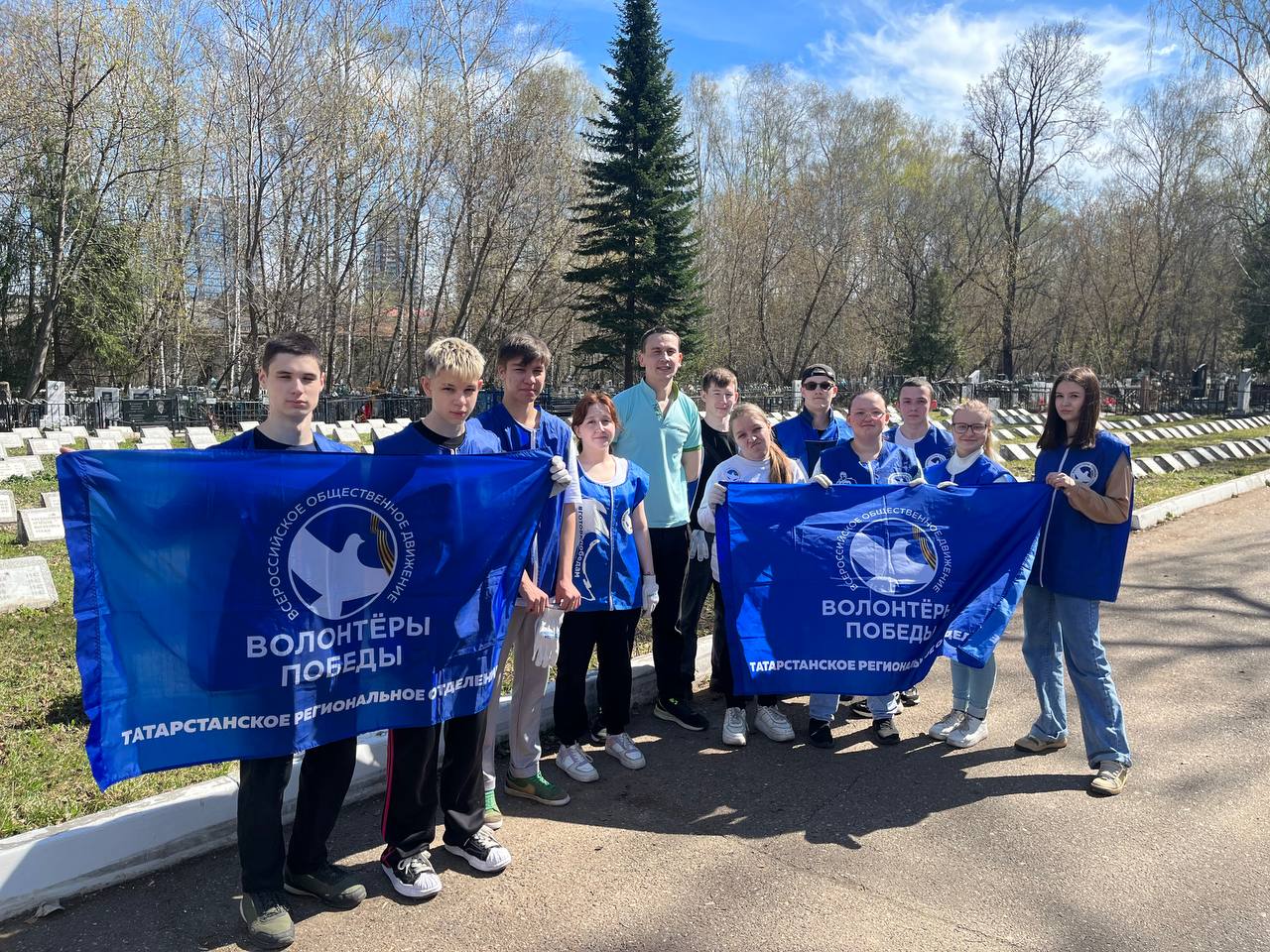
Торжественное награждение Волонтёров Победы Республики Татарстан

Сегодня 15 июня состоялось торжественное награждение Волонтёров Победы Республики Татарстан,

по итогам работы  I полугодия 2024 года.
Наши волонтёры  награждены за особые заслуги в сфере гражданско — патриотического воспитание

подрастающего поколения! За активную работу по подготовке к 79-ой годовщине Победы в Великой

Отечественной войне. Поздравляем и желаем дальнейших успехов!

Мастер-класс

12 июня наши волонтёры приняли участие в праздновании Дня России в дворце культуры Железнодорожников!

Наши студенты проводили занимательные мастер-классы для детей и молодых семей, радуя их интересными заданиями и творческими идеями. Дети были в восторге, участвуя в наших увлекательных активностях!
А в конце мероприятия волонтёры получили приятные сюрпризы — бесплатные билеты в кино!  Это было замечательное вознаграждение за их труд и доброту, которые они вложили в помощь и развлечение участников праздника.
Мы гордимся нашими волонтёрами и благодарим их за активное участие в этом интересном мероприятии. Они сделали День России ещё ярче и запоминающимся для каждого участника!

Онлайн-конкурс «ЭКВЕСТ»

5 июня 2024 года в рамках Дня охраны окружающей среды в Казанском государственном энергетическом университете были подведены итоги VIII Республиканского онлайн-конкурса «ЭКВЕСТ», в рамках которого прошло награждение победителей и призеров.
Онлайн-конкурс «ЭКВЕСТ» уникальный конкурс среди экоактивистов Республики Татарстан, который собирает вместе единомышленников, заботящихся об окружающей среде и развивающих экологическую культуру в Республике Татарстан.
На церемонии награждения победителей с приветственными словами выступили: 
Тарнавский Егор Александрович, Заместитель министра экологии и природных ресурсов Республики Татарстан;
Сатикова Дилара Данифовна, Руководитель Молодежного экологического движения Республики Татарстан «Будет чисто».
•Ившин Игорь Владимирович, Проректор по науке и коммерциализации Казанского государственного энергетического университета.
Команда колледжа стала победителями VIII Республиканского онлайн-конкурса «ЭКВЕСТ»

«День открытых дверей»

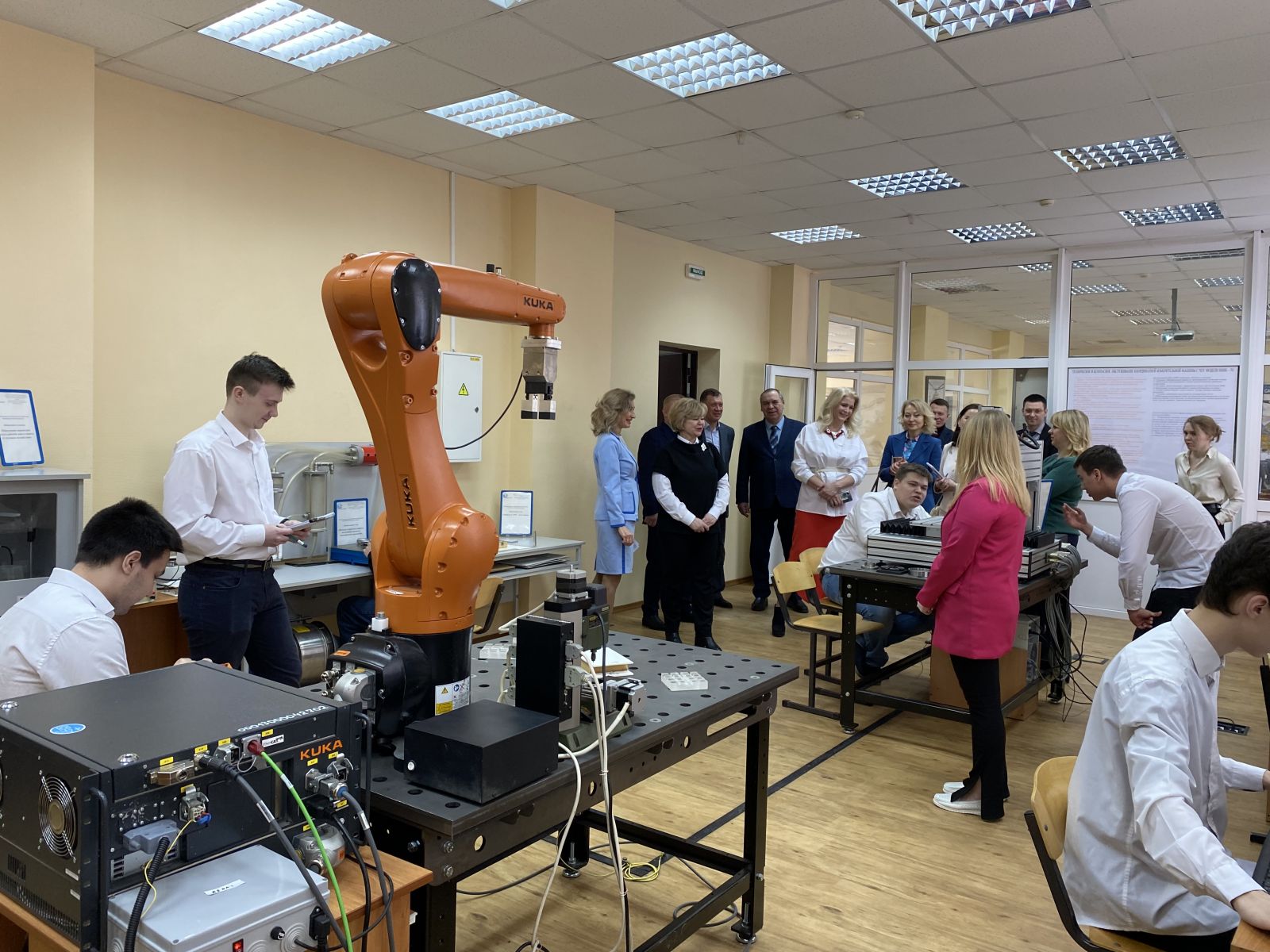
Сегодня в колледже прошел уже четвертый «День открытых дверей» по многочисленным просьбам жителей района. Для родителей и учащихся были представлены профессии и специальности по которым готовит специалистов колледж.